
You do not need to be a gamer or a tech expert to ask, what is custom built PC, and whether it makes more sense than buying a standard computer off the shelf. For many home users and small businesses, the real question is simpler – will it do the job you need, last well, and give you better value over time?
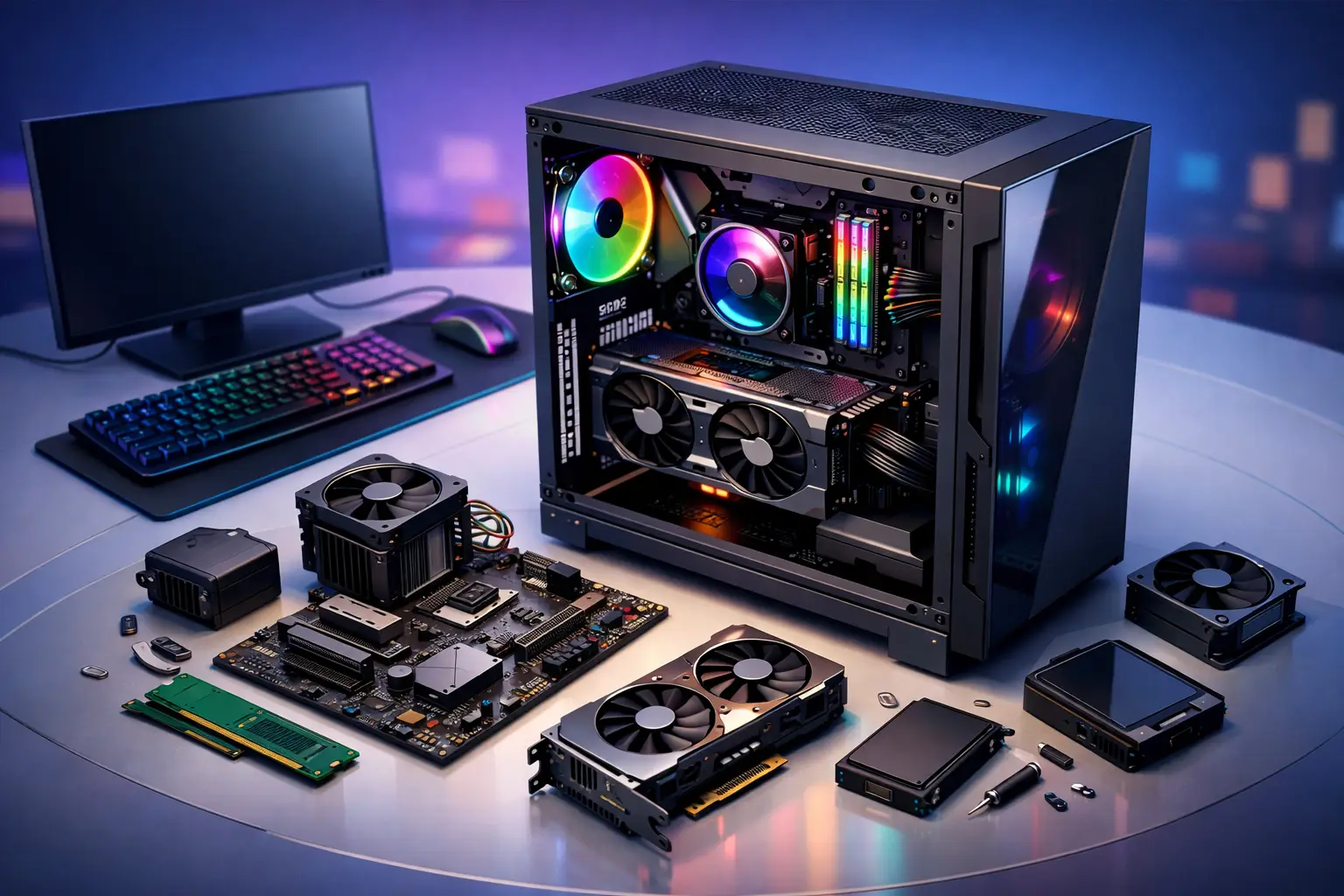
A custom-built PC is a computer assembled from individual parts chosen to suit a specific purpose. Instead of buying a pre-made machine with fixed specifications, you select the processor, memory, storage, graphics, case, cooling, and other components based on how you actually use your computer. That could mean a straightforward home office setup, a family desktop, a business workstation, or a higher-performance machine for design, editing, or gaming.
The key difference is that a custom-built PC is tailored. You are not paying for features you do not need, and you are less likely to end up with a machine that struggles with the tasks you do every day.
What is a custom built PC and how does it work?
A custom-built PC starts with the same basic building blocks as any other desktop computer. It needs a central processor, motherboard, RAM, storage drive, power supply, and a case to hold everything together. Depending on the job, it may also include a dedicated graphics card, extra cooling, Wi-Fi capability, or specialised ports and accessories.
What makes it custom is the way those parts are chosen and assembled. A basic family PC might focus on reliability, quick startup times, and enough storage for documents and photos. A small business computer may need stronger multitasking performance, support for two screens, secure storage, and room for future upgrades. A content creator or CAD user may need more memory, a fast processor, and a graphics card that can handle demanding software.
When done properly, the components are matched for compatibility and balanced performance. There is no point pairing a top-end processor with too little memory, or buying a powerful graphics card if the computer is only used for email, invoices, and web browsing. Good custom builds are not about chasing the most expensive parts. They are about choosing the right parts.
Why people choose a custom-built PC
For many people, the appeal comes down to fit for purpose. Pre-built computers are designed for mass sale. That means they often aim for broad appeal rather than your exact needs. Sometimes that works fine. Other times, you end up compromising.
A custom-built PC gives you more control over performance, storage, and future upgrades. If you need a quiet office machine, that can be built. If you want a desktop that opens large spreadsheets quickly and handles bookkeeping software all day, that can be built too. If your current machine is slowing down because it has an old hard drive or not enough RAM, a new custom system can be designed to fix those pain points from the start.
There can also be a value advantage. Not always cheaper upfront, but often better value in the long run. You are investing in the parts that matter most for your use, and that can mean a longer service life and simpler upgrades later.
Is a custom-built PC better than a pre-built computer?
It depends on what you need and how involved you want to be.
A pre-built computer can be the right choice if you want something basic, available immediately, and suited to general use. Many people are perfectly happy with that. For light home use, email, streaming, and document work, an off-the-shelf system may be enough.
A custom-built PC is often better when your needs are more specific, or when you want clearer value from your budget. It can also be a smarter option if you want to avoid common weak points found in some mass-produced systems, such as limited upgrade options, lower-quality power supplies, minimal cooling, or cramped cases that make future changes difficult.
The trade-off is that custom builds require proper planning. Parts need to be compatible, and the system should be assembled, tested, and set up correctly. That is why many customers prefer having a local technician build and install the system for them, rather than trying to sort it all out alone.
Who suits a custom-built PC?
Custom desktops suit more people than many realise. They are not only for enthusiasts.
Home users often benefit when they want a reliable machine for internet browsing, online banking, video calls, photos, schoolwork, and general day-to-day tasks. A custom build can be designed to be easy to use, quick to start, and dependable without overspending.
Home office users and remote workers usually need something a bit stronger. If you are juggling email, accounting software, video meetings, cloud storage, and multiple browser tabs, performance starts to matter. A custom-built PC can make that daily workflow smoother and less frustrating.
Small businesses often gain the most. A business computer needs to be practical, stable, and ready for the way your team works. That may mean better multitasking, more storage, dual-screen support, or room to expand later. When downtime costs money, having a system built around your actual workload is often worth it.
Then there are users with more demanding needs, such as gaming, video editing, music production, graphic design, engineering software, or large file handling. These tasks benefit from hardware chosen with care rather than guesswork.
What should be considered before buying one?
The starting point is not the parts list. It is how you use the computer.
Think about the software you rely on, how many programs you run at once, whether you store large files, and whether speed, quiet operation, or upgrade potential matters most. Your budget also matters, but the cheapest option is not always the best buying decision if it leads to frustration or replacement too soon.
You should also consider where the computer will be used. A business reception desk has different needs from a back office. A family study nook may need a compact system. Rural and regional customers often value a machine that is dependable and easy to service locally rather than something flashy.
Operating system setup, data transfer, printer connection, email configuration, backups, antivirus, and internet setup should be part of the conversation too. The computer itself is only part of the overall solution.
Common myths about custom-built PCs
One common myth is that custom PCs are only for gamers. Gaming is one use case, but far from the only one. Plenty of custom systems are built for office work, home use, bookkeeping, school tasks, and business operations.
Another myth is that custom always means expensive. It can be, if you choose high-end components. But it can also be a sensible way to stay within budget by avoiding unnecessary extras.
Some people also assume custom-built computers are harder to maintain. In reality, they can be easier to service and upgrade because standard parts are used. That can make repairs more straightforward down the track.
The last myth is that you need to know all the technical details yourself. You do not. A good local provider should explain your options in plain English and recommend a system based on what you actually need, not what sounds impressive on paper.
What is custom built PC value in the long term?
Long-term value comes from getting the balance right. A well-planned custom-built PC can stay useful for years because it is designed around your workload and can often be upgraded later. Adding more RAM, extra storage, or a better graphics card is usually easier than replacing the whole machine.
That matters for both households and small businesses. Replacing a computer is not just about buying hardware. It can involve setup time, software installation, data transfer, and lost productivity. If a custom-built system delays that disruption and keeps pace with your needs for longer, the value becomes clearer.
For customers across Caboolture, Moreton Bay, and surrounding areas, local support also adds something important – confidence. If there is a question, upgrade, or issue later on, it helps to deal with someone nearby who understands your setup and can assist on site when needed.
A custom-built PC is not automatically the right answer for everyone. But if you want a computer that matches the way you work, avoids paying for the wrong features, and gives you room to grow, it is well worth considering. The best computer is not the one with the biggest specs list. It is the one that quietly gets on with the job and makes your day easier.