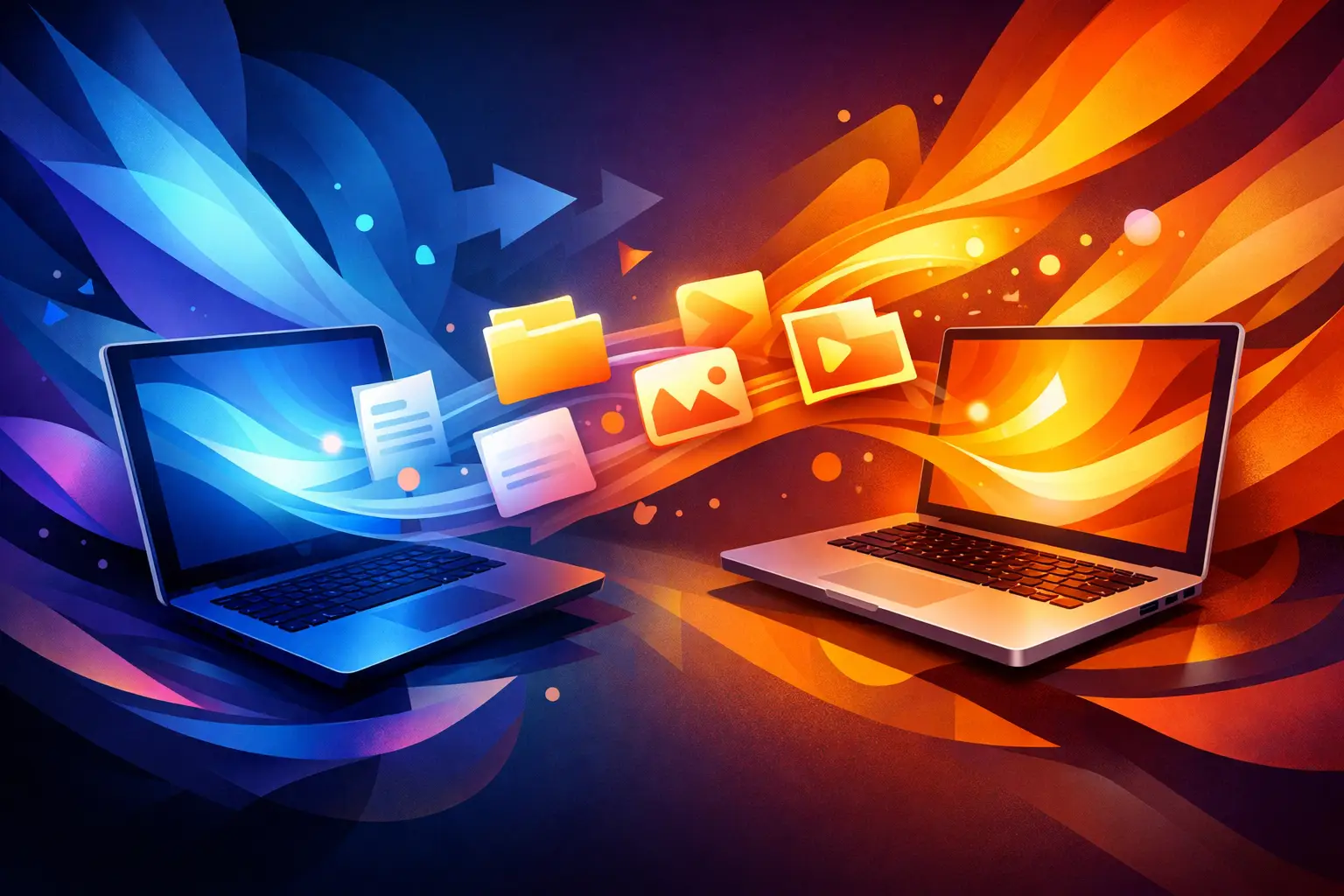
A new computer should feel like an upgrade, not a stressful hunt for missing family photos, work documents or email folders. The safest way to approach how to transfer files to new computer is to treat it as a short project: check what you have, create a backup, choose a suitable transfer method, then confirm everything arrived before wiping or giving away the old machine.
For most home users, the job can be straightforward. For a home office or small business, it needs a little more care because files may be spread across several user accounts, cloud services, external drives and programs. The best method depends on how much data you have, whether both computers are working properly and how quickly you need to be up and running.
Start with a proper backup
Before moving anything, make a separate backup of the old computer. A transfer can be interrupted by a flat battery, a failing hard drive, an incorrect setting or simply copying the wrong folder. A backup means one mistake does not become a permanent loss.
An external hard drive is often the most practical choice for a large collection of photos, videos and documents. Copy the important folders to the drive, then safely eject it and keep it somewhere secure. If you already use a trusted cloud storage service, check that it has fully synchronised before beginning.
Do not assume that everything sits in the Documents folder. Important files are commonly stored on the Desktop, in Downloads, Pictures, Videos, scanned-document folders and accounting or business software folders. If several people use the old computer, check each user account separately.
Before you begin, make a quick list of what must be moved:
- Personal documents, photos, videos and music
- Email, contacts and calendar information
- Browser bookmarks, saved passwords and important downloads
- Business files, templates, invoices and customer records
- Software licence details, account logins and two-factor authentication methods
That list gives you something to check against once the new computer is set up.
Choose the right way to transfer files to a new computer
There is no single best option for every household or business. A direct transfer may be quickest for a small amount of data, while a large photo library may be better handled with an external drive. Cloud storage is convenient, but only if there is enough storage space and a reliable internet connection.
External hard drive or USB drive
An external hard drive is a dependable option when you have a lot of files, slow internet or limited time. Connect it to the old computer, copy the selected folders, then connect it to the new computer and copy them across. A USB flash drive can do the same job for smaller transfers, such as documents and a modest photo collection.
This approach gives you a physical backup at the same time, which is a real advantage. The trade-off is that you need enough capacity on the drive and should allow time for large video or photo folders to copy. Never unplug the drive while files are being transferred.
Cloud storage
Cloud storage can make moving files easier when your folders are already organised and syncing correctly. Sign in to the same cloud account on the new computer, choose the folders you want available, and let the service download them.
It is especially useful for documents you need on more than one device. However, it may not be the right choice for hundreds of gigabytes of photos or videos, particularly on slower regional internet connections. Check your available storage allowance and confirm that the cloud icon or application says your files are up to date before relying on it.
Direct transfer over your network
If both computers are working and connected to the same home or office network, files can be copied directly between them. This can be convenient, although the setup is more technical and transfer speeds can vary depending on the Wi-Fi signal and the age of the devices.
A wired network connection is generally faster and more reliable than Wi-Fi for a large transfer. This method is better suited to people comfortable with shared folders and permissions, or to businesses that already have a properly configured network.
Migration software or professional help
Some programs can help move user files and settings between Windows computers. They can save time, but they are not a guarantee that every application, saved password or setting will work perfectly on the new machine. Software installations often need to be installed again, especially when moving to Windows 11.
If the old computer is failing, contains important business records or has years of files in unknown locations, professional assistance can prevent a rushed decision. A technician can assess the old drive, transfer the required data, set up the new computer and make sure you can access what matters before the old device is retired.
What normally will not transfer properly
Copying files is not the same as copying an entire computer. Your documents, pictures and many application data files can be moved, but most installed programs need to be downloaded or installed again on the new computer. That includes office software, accounting programs, antivirus tools, printers and specialist business applications.
You will also need to sign back into many services. Keep your mobile nearby if your accounts use verification codes. If passwords are saved in a browser, make sure browser syncing is enabled or export bookmarks before replacing the old computer. For sensitive passwords, a reputable password manager is generally safer than storing them in a document.
Email requires special attention. Webmail accounts usually reappear once you sign in, but email stored only on the computer may need to be exported first. This is common with older email programs and some business email setups. Check that older emails, contacts and attachments are available on the new computer before deleting anything from the old one.
Set up the new computer before copying everything
Turn on the new computer, complete its initial setup, install updates and make sure security protection is active. Create the user accounts that will be used day to day, then install the essential programs first. This gives you the right place to put files and avoids filling the new computer with old clutter you no longer need.
Take the opportunity to organise. Old installers, duplicate photos, temporary downloads and outdated documents do not have to come along for the ride. Keep your active files easy to find, archive older material separately, and consider placing key documents in a cloud-synchronised folder for future protection.
For a small business, check that shared folders, printers, accounting software, email and backups are operating correctly before staff start using the computer. A new machine may be fast, but it is not ready for work until it can access the tools and records your business depends on.
Check the transfer before retiring the old computer
Once files have been copied, open a selection rather than trusting folder sizes alone. Test recent documents, older photos, spreadsheets, PDFs and video files. Confirm that they are in the expected location and that the new computer has enough free storage left for normal use.
Check your email, bookmarks, cloud folders and printer access as well. If you use specialised software, open a recent file and make sure it displays correctly. For business data, compare important folder names and file counts against the old computer where practical.
Keep the old computer and your separate backup for a little while. Do not erase, sell or recycle the old machine until you are confident that the new one is working properly and every essential item is available. When you are ready to dispose of it, securely remove personal data rather than simply deleting folders.
Moving to a new computer is also a good time to put a simple backup routine in place. If you would prefer a local technician to handle the transfer, setup and final checks at your home or office, AllTec Computer Services can provide practical help across Caboolture and nearby areas – so your new computer is ready to use with the files that matter safely in place.